Living in Stafford, VA, means dealing with water from the Potomac River area. The local geology adds calcium and magnesium to it. This creates hard water that hits you with dry skin after showers, or laundry that looks faded no matter how you wash it. Hard water has too many minerals like calcium and magnesium. This article shows key signs you need a water softener in Stafford, VA. It helps you spot issues fast.
Visible Deterioration of Plumbing and Appliances
Hard water leaves marks on your home setup. It builds up over time. You see it in faucets and pipes first.
Limescale Buildup on Fixtures and Faucets
White chalky spots form on taps and showerheads. People often think it’s soap leftover. But it’s mineral scale from hard water. Wipe a wet shower door right after use. If residue stays, that’s limescale. It sticks to metal and glass. Over months, it thickens. This makes fixtures look old. Cleaning takes more effort. Vinegar helps remove it at first. But buildup keeps coming back without a fix.
Reduced Efficiency and Lifespan of Water Heaters
Minerals coat the heating parts inside. This acts like insulation. The heater works extra hard to warm water. Energy use goes up by 20 to 30 percent, per industry reports. Your bills rise each month. The unit wears out faster too. A normal heater lasts 10 to 15 years. With scale, it drops to eight years or less. Check for hot spots on the tank. That means uneven heating from buildup. Fix it early to save cash.
Clogged Pipes and Reduced Water Pressure
Scale narrows pipes from the inside. Water flow slows down. You notice it when showers weaken. Or sinks take longer to fill. Corrosion starts slow but builds up. In Stafford homes, older pipes suffer most. Pressure drops across the house. It affects every tap. Call a plumber if flow halves from normal. Untreated hard water speeds this wear. A softener stops the clogging.
The Impact on Cleaning and Household Chores
Daily tasks get tougher with hard water. You use more products to fight it. Costs add up quick.
Soap Scum and Ineffective Cleaning
Minerals block soap from bubbling well. It forms curd on sinks and tubs. You scrub harder each time. In a hard water home, you need twice the soap for the same clean. Think about baths that stay slippery. Or counters with rings that won’t fade. This reaction ties up soap ions. Rinsing leaves films behind. Soft water lets suds form easy. Chores feel less like a battle.
Dingy Laundry and Stiff Fabrics
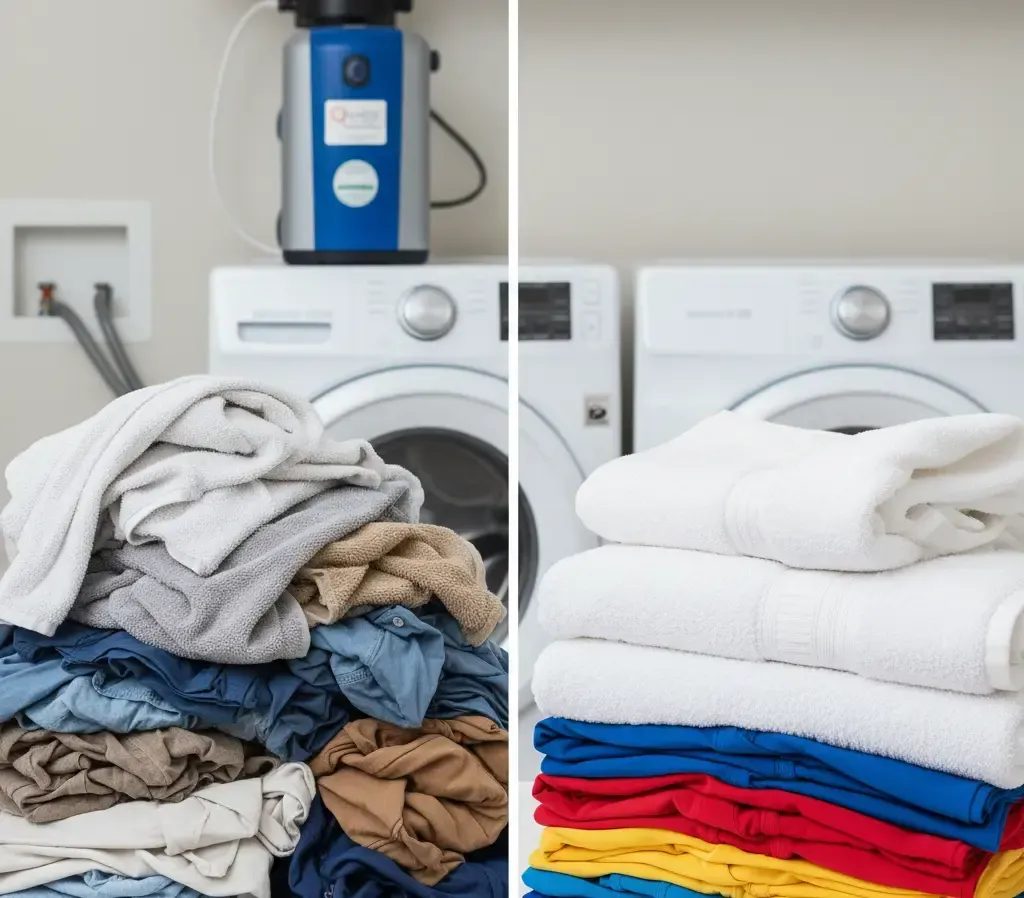
Minerals stick in cloth threads. Clothes come out rough to touch. Colors lose brightness after few washes. Whites turn gray fast. You add softeners or bleach more often. But it doesn’t help much. Hard water traps deposits deep in fibers. Fabrics wear out sooner. A load in soft water rinses clean. Yours might need an extra cycle. Feel the towel after drying. Stiff means hard water at work.
Spotting and Filming on Glassware and Dishes
Dishes show white spots after the machine runs. Glasses look etched or cloudy. It’s not the rinse aid failing. Minerals dry on surfaces. They leave films that build up. In Stafford, VA, this hits many kitchens. Run a cycle with vinegar to clean it once. But spots return without change. Soft water prevents the marks. Your dishwasher runs better too. Check plates close. Tiny dots signal the need.
Tired of Hard Water Symptoms?
Get a definitive answer with our free, no-obligation water analysis. Test My Water Free